The loss of one of earths greatest natural wonders
The outstanding beauty associated with coral reefs has seen thousands of tourists flock to these natural wonders annually.
The increase in available information throughout modern society has driven public interest in coral reefs globally.
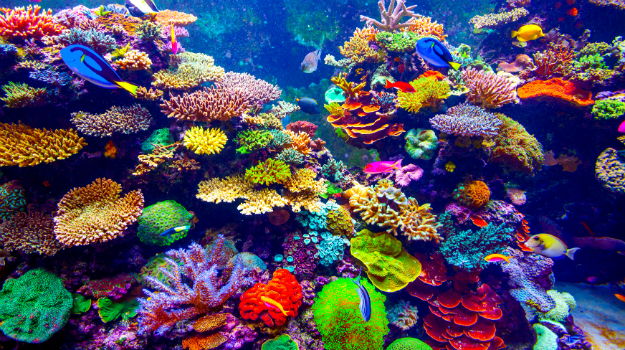
http://s3.travel.india.com/wp-content/uploads/2015/10/30travel-andaman6.jpg
The importance of coral reefs in supporting large scale biodiversity, and as a bioindicator of marine health has become common knowledge as a result of free information.
Unfortunately, so has the growing threats imposed on these wonders.
The reefs are loosing the battle
According to Gareth J. Williams, associate professor of marine biology at Bangor University, 19% of all coral reefs have been lost, with a further 15% threatened with loss over the next 10 – 20 years.
The increase in ocean temperatures couples with falling PH levels has caused corals to expel symbiotic algae used as the primary feeding source, thus corals lose their primary feeding source.
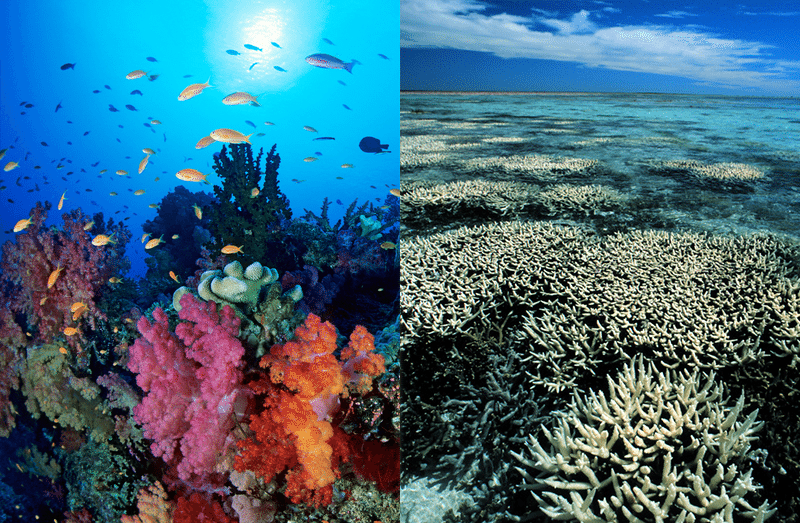
https://digital.hbs.edu/platform-rctom/submission/coral-reef-or-coral-debreef/
This process is called bleaching and is the primary cause of reef decline.
Does this mean goodbye
Corals are mixotrophs, therefore not solely dependant on its symbionts for nutrition.
Gareth highlighted the importance of understanding how corals interact with prey and how much coral can rely on prey as a primary food source.
This may be the key to finding a solution to coral decline.
Gareth emphasised that feeding via predation increases the reproductive capacity of corals, thus allowing population regeneration.
So, what do corals prey on?
What does this mean in terms of abundance?
Finding the evidence
Gareth and his team of researchers examined coral diet across the remote Southern Line Islands of Kiribati using stable isotope analysis.

https://www.pinterest.co.uk/pin/419327415276692045/
The pristine nature of the reefs showed an increased availability of planktonic prey in which corals were feeding on, thus correlating with an increase in predation.
This emphasises the importance of prey abundance in areas associated with loss as expulsion of symbiotic algae may be irrelevant if prey abundance is high enough.
A view from space
Moving forward with this information, the team began using satellite imaging to calculate the abundance of phytoplankton over 16 locations globally.

http://mrvanarsdale.com/marine-science/online-textbook/chapter-5-ocean-currents/
The results showed a clear relationship between the feeding habits of corals and the concentration of chlorophyll in the water.
This ultimately indicated areas of high food abundance are more likely to prey on planktonic organisms, therefore more resistant to bleaching.
Can we save the corals by feeding them?
The availability of food during stress may hold the key to coral reef survival.
https://www.youtube.com/watch?v=JgDSnQ04Hp4
This may also be one of the primary reasons as to why some reefs are more resistant to thermal stress than others.
The findings of Dr Gareth J. Williams provides methods of locating more resilient reefs around the world.
My Take
I repeatedly hear that Earths coral reefs will be gone in the next 50 years, future generations will be unable to witness these natural beauties, and there is nothing we can do about it.
Gareth’s research has provided a glimmer of hope to the many who value the beauty and ecological importance of reefs.
This has placed emphasis on understanding other at risk organisms going forward with my research career as climate change is inevitable.
This talk has highlighted the amazing power of satellite imaging for research purposes, and no doubt will be used at some point throughout my career.
Friday 13th December 2019
 Alex's Blog
